Honk Jam — Car Parking Puzzle
Unity Car Parking Puzzle with a Solver-Verified Level Pipeline
Overview
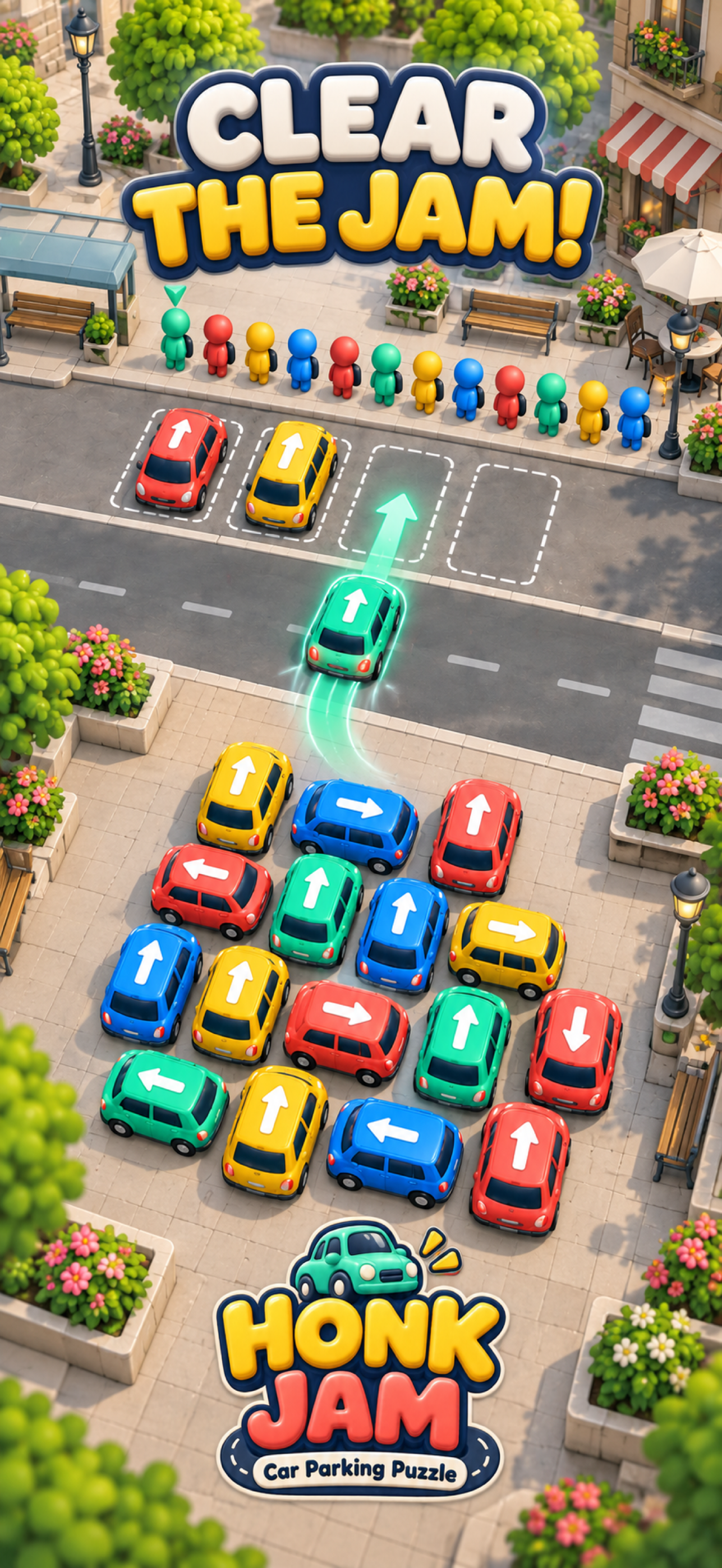
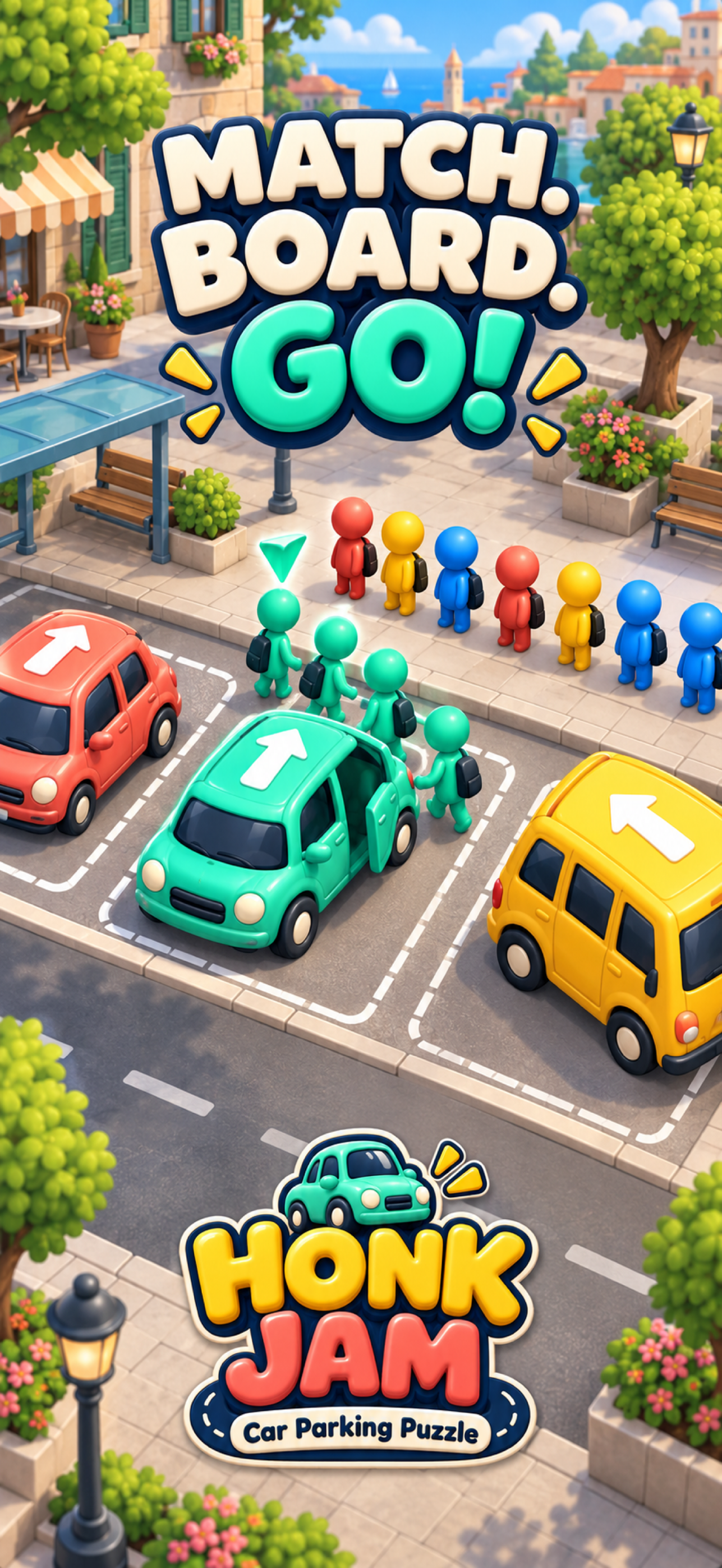
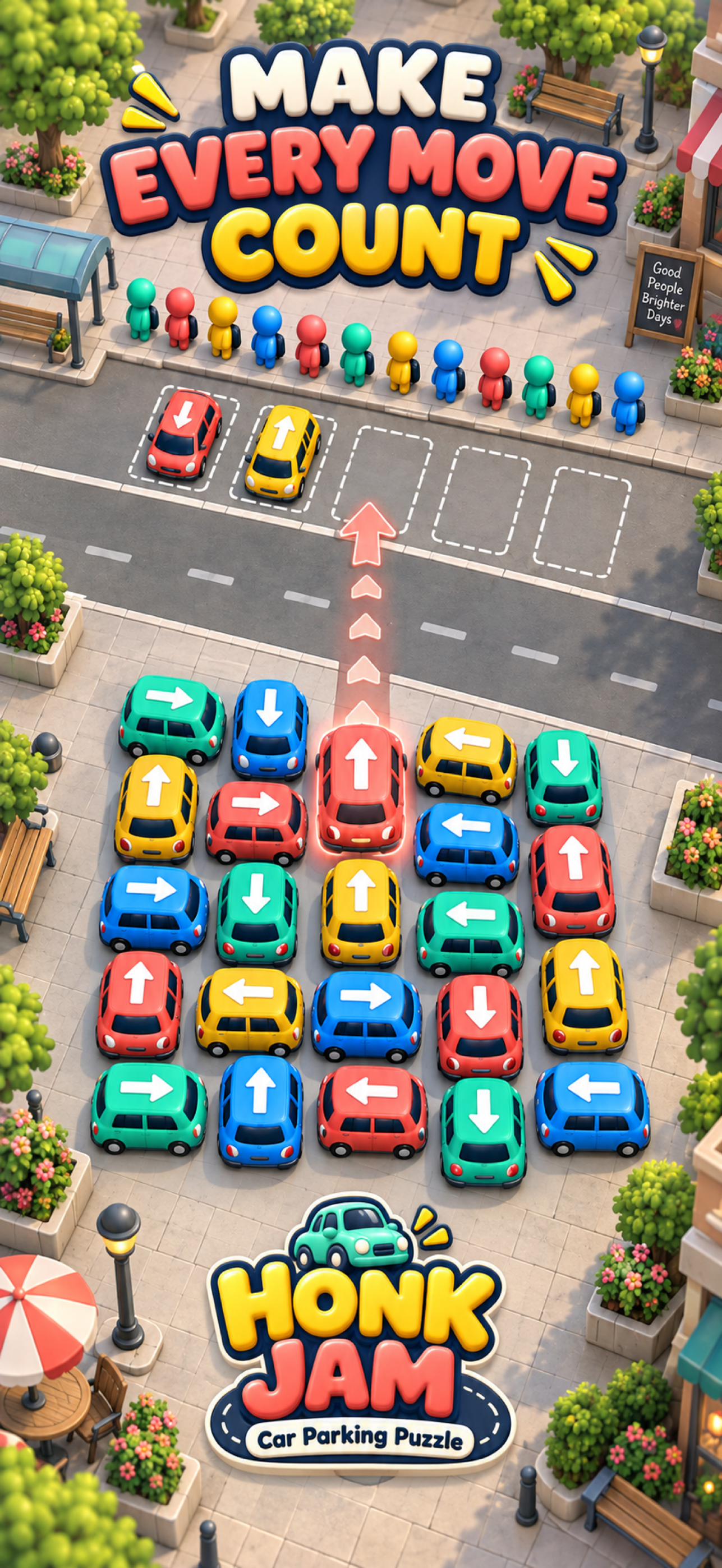
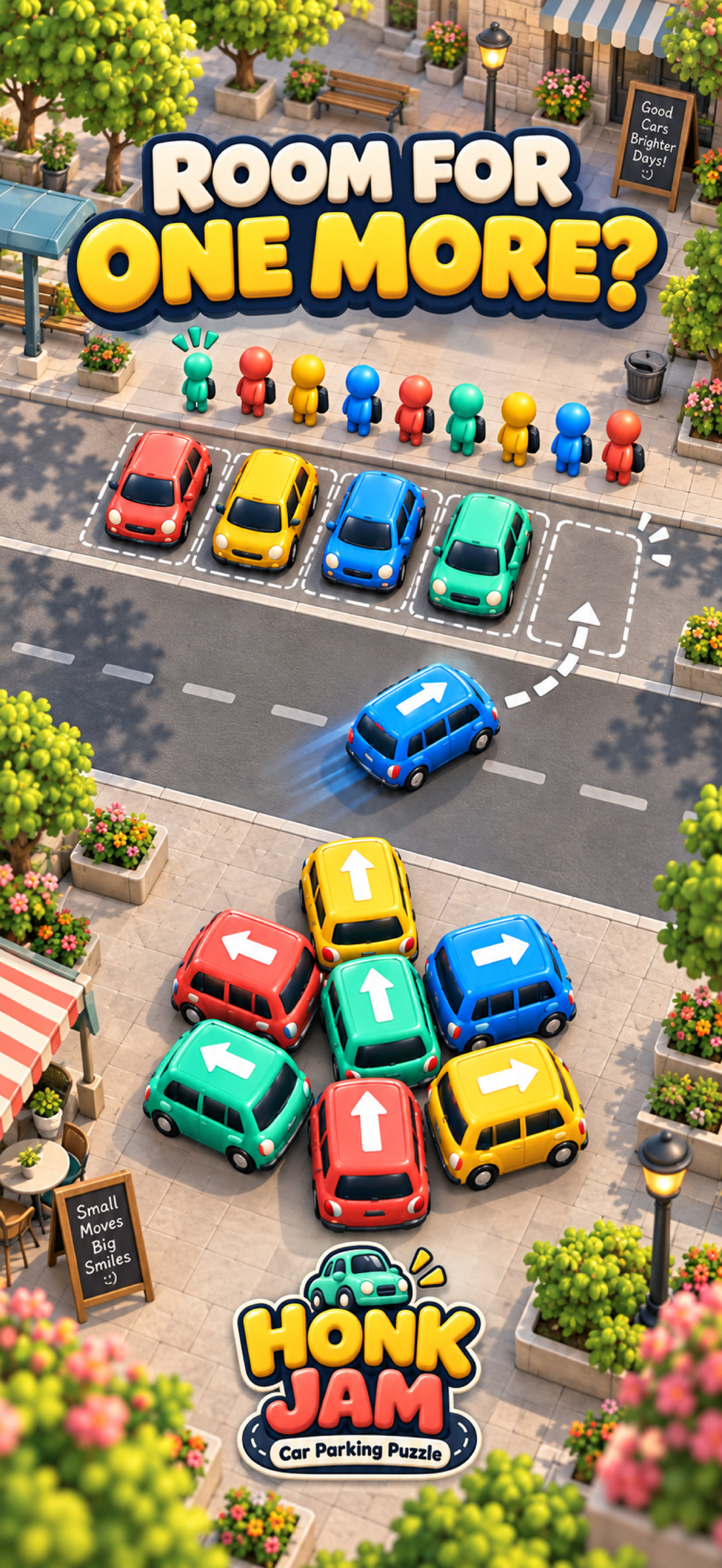
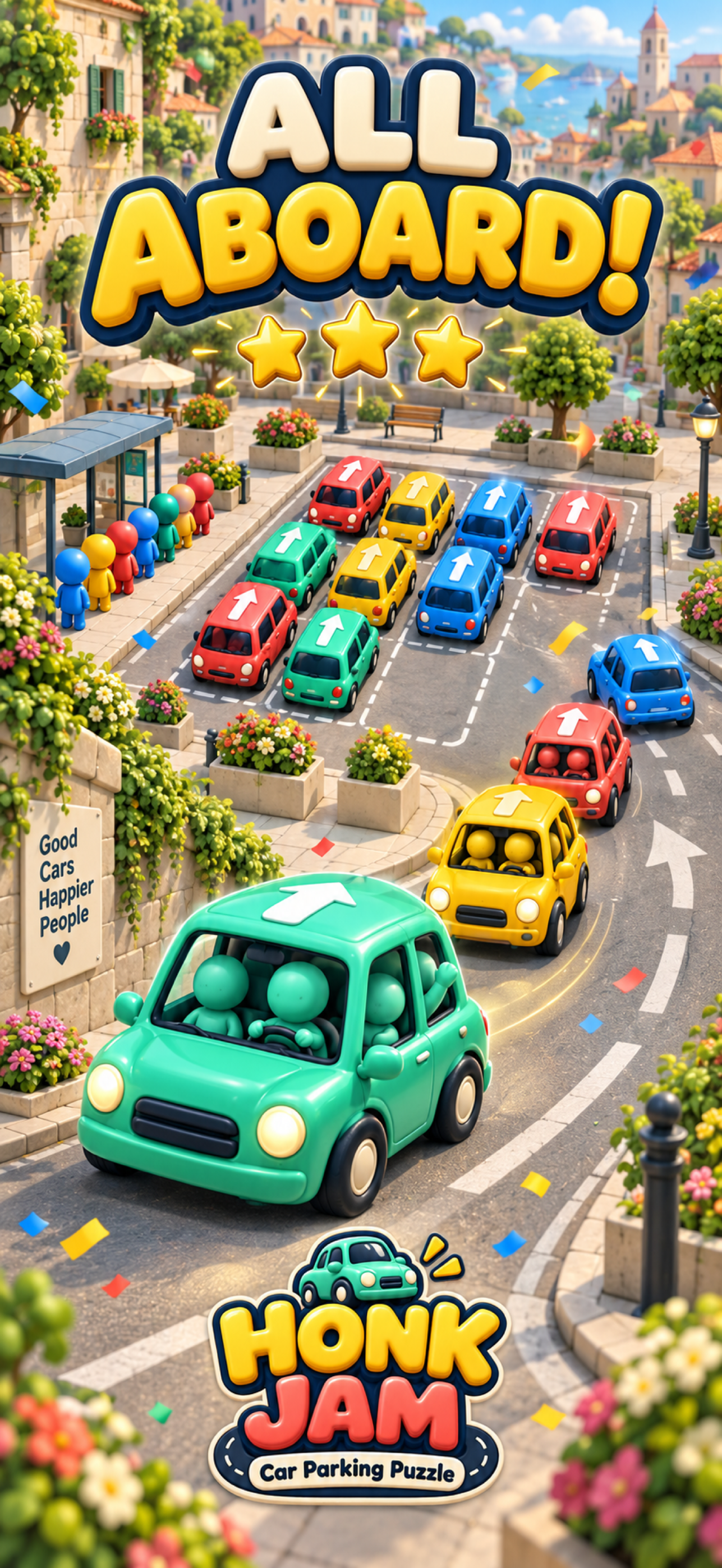
Honk Jam is a car parking puzzle about doing things in the right order: tap a car, it drives out of the lot, and passengers of the matching color board it at the pickup dock. It is the third Group Taiga game and the first one built in Unity 6 (C#, URP), running on the shared Go game backend. Every level is run through a solver before it ships, and the game contains no ads.
What It Does
Players clear 500 levels in five packs (the first bundled, the rest delivered from a CDN), meeting 11 mechanics such as buses, cones, hidden-color cars, key and lock cars, one-way barriers, hitched cars, garages, a second deck, timed levels and VIP riders. A daily puzzle has its own time leaderboard, a Classic Rush-Hour mode adds 160 levels, and boosters, daily tasks, a login streak and garage skins round out the loop.
Key Features
500 levels in five packs with 11 mechanics, each introduced with an explanation card
Daily puzzle with a time-ranked leaderboard, plus weekly, country and global boards
Classic Rush-Hour mode with 160 BFS-solved levels
Undo, extra dock slot, queue shuffle and a hint that finds a safe next move
Daily tasks, piggy bank, login streak and garage skins
Offline outbox with optimistic updates; no ads
24 in-game languages
Gallery
Technical Highlights
Key Achievements
Shipped the third Group Taiga game and the first Unity title to the App Store and Google Play
Kept two rule engines in two languages provably in sync with 1,000 golden test cases
Hardened the economy in a backend audit so signed reward events pay out exactly once under replay and concurrency
Built server-side ad verification for later use while shipping an ad-free game
Impact & Results
Honk Jam carried the shared game base from React Native into Unity, proving that the same Go backend, economy and anti-cheat model can serve a native-engine game with a much richer visual layer.