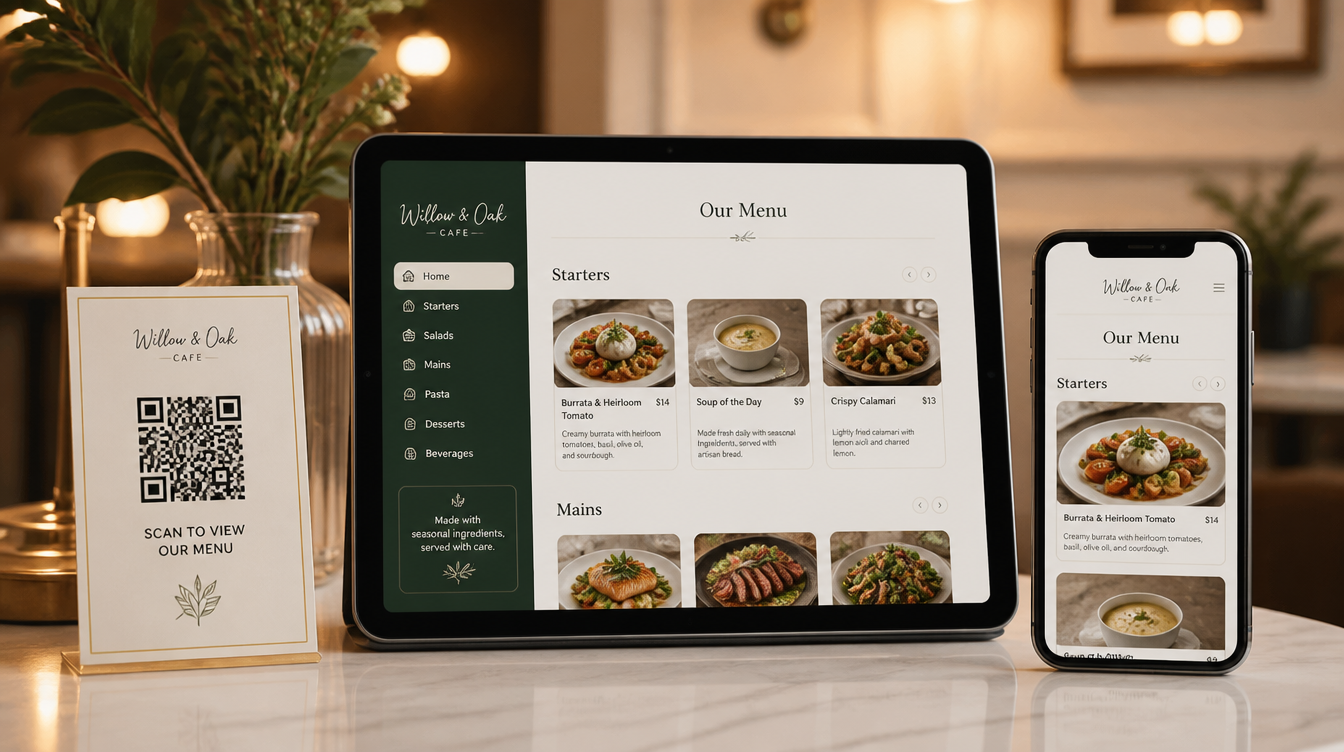
MenuApp - Digital Menu Management Platform
Multi-Tenant Digital Menu Management Platform
Overview
MenuApp is a modern multi-tenant SaaS platform that lets restaurants, cafes, and similar businesses build and manage their digital menus. Built on ASP.NET Core 8.0 MVC with a 3-layer architecture, it gives each user complete data isolation across multiple business profiles. Owners categorize products with images and publish shareable, QR-accessible menu pages for their customers.
What It Does
MenuApp lets a single account independently manage multiple brands, each organized through a hierarchical Brand to Category to Product model. Every business gets a dynamic, slug-based public page (/menu/{slug}) that customers reach directly or via a shareable QR code. Authentication is handled through ASP.NET Core Identity and Google OAuth, while session-based state lets owners switch the active business inside the admin panel.
Tech Stack
Key Features
Multi-Tenant Architecture: Each user can independently manage multiple brands/businesses
Hierarchical Structure: Brand → Category → Product model for organized content management
Dynamic Public Pages: Unique slug-based menu pages for each business (/menu/{slug})
Authentication: ASP.NET Core Identity and Google OAuth integration
Image Management: Multiple image upload with user-based file organization
Session Management: Users can select active businesses in the admin panel
Social Media Integration: Facebook, Instagram, TikTok, X account linking
QR Code Support: Shareable QR codes for easy menu access
Technical Highlights
Key Achievements
Implemented secure multi-tenant architecture with complete data isolation
Built scalable caching strategy supporting both in-memory and distributed Redis
Created dynamic routing system for public-facing menu pages
Integrated dual authentication system (Identity + OAuth)
Developed comprehensive image management with user-based file organization
Impact & Results
MenuApp demonstrates enterprise-level ASP.NET Core development skills with clean architecture principles, security best practices, and scalable design patterns. The platform showcases expertise in building SaaS applications with multi-tenant capabilities, external authentication providers, and performance optimization through caching strategies.